When I initially proposed the idea of having an ELT Research Blog Carnival to share what we as English language professionals had been learning through academic journal articles, I never really anticipated the response I would get. Deep down, I thought that this idea wouldn’t really catch on and it would die before it ever got started. I was pleasantly surprised, actually shocked would be more apt here, at the response I received from others. I thought I might be too optimistic to think that 2-3 people would join me in the first run, but instead there are a total of seven posts to share! I believe it shows how much ELT instructors care about learning and growing in their field. They are happy to question and reflect on what is happening in their classroom in order to help their students grow. I am proud…
I came across this on You Tube this afternoon, and I couldn’t resist sharing it with you all. It is always a pleasure to listen to David Crystal discussing language, and his views on what is happening in English are sharp and refreshing. Enjoy!
This is the 300th post in this blog. I would like to thank everyone who has visited this site, and left their comments or likes. To celebrate this milestone, I am reblogging the post which has been most visited, Speaking exams: What to do … and what to avoid’, first published on 27th May as part of the ‘How to…’ series in associaton with the TESOL Spain e-newsletter.
As the main external exam season starts, I thought this would be a good time to write a post giving tips for how to approach the speaking exams in particular. To kick off, here is a new video from Cambridge English TV with some useful ideas about answering questions in the speaking tests.
Answering the questions
Clearly, you cannot be marked on language which you do not produce, so you should aim to answer questions fully. However, sometimes the question seems to be asking for a simple answer – an apparently closed question with no interrogative pronoun. In this case, the temptation is to give the simple answer, but these questions are provided with a possible back-up question in the examiner’s script – ‘Why?’, so if the candidate does not…
Note: This post is my submission for the 1st ELT Research Blog Carnival. If you are interested in knowing more about writing one yourself, please go to the ELT Research Blog Carnival website.
I was barely 16 and has just moved to the ‘big city’ when I started looking for my first job. With a fist full of resumes and a dress shirt and tie on, I wandered up and down the shopping mall looking for help wanted signs when I spotted a notice in the photo store window. Having grown up around photographers and my dad having a photo shop and studio when I was younger, I thought this would make a great fit. I strode up to the counter and asked for the manager. She came out and I politely introduced myself and handed her my resume. She took a minute to look…
Welcome to ELT Research Blog Carnival, the aim of which is to provide a space for ELT professionals to discuss research articles on a common theme. The first topic is ‘Listening’, and it is open until 23rd August.
In any primary classroom, the spoken word is paramount. Young children have the capacity to acquire a foreign language in a natural way, almost without realising it, if they are exposed to the language early enough and extensively enough, and this is exploited. Our main objective in the primary classroom is to enable our students to communicate effectively in the foreign language. Literacy in L2 is something that takes second place in many schools, indeed it is sometimes even supposed that literacy in the mother tongue will be enough to enable students to read effectively in English. Writing, at least writing more than the odd sentence, is hardly touched upon until the students are much older, and again there is a supposition that what they have learnt in their mother tongue means that they should be capable of writing in English.
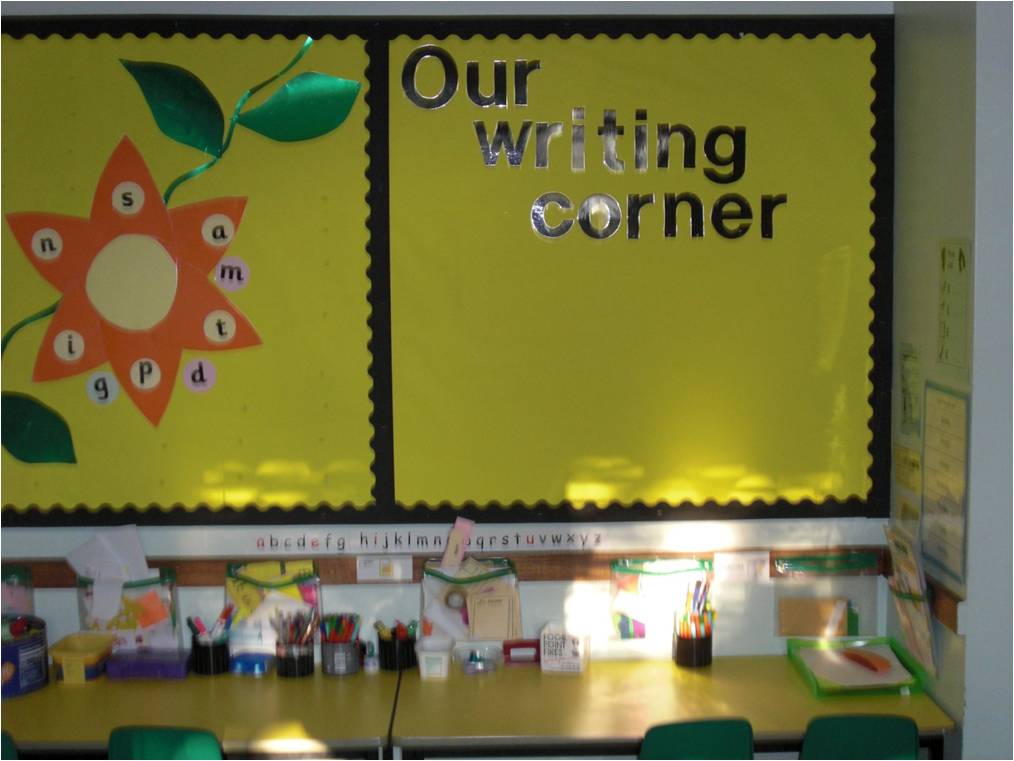
However, things are changing. Over the last ten years, what is required of students in Primary has increased dramatically, with various bilingual programmes being developed and with CLIL becoming more prevalent in the teaching of a foreign language. Added to this, the Cambridge YLE exams have become increasingly popular, and in some countries it is increasingly normal for KET and even PET to be done while the students are still in Primary, helped by the development of the ‘for Schools’ version of these exams. If these objectives are to be achieved, it is important that attention should be paid to writing and text construction from a much earlier age, in parallel with the development in oracy which has been foregrounded for so long. In this series of posts, I will examine how we can implement a structured approach to writing from a very early age in order to cover the requirements of CLIL and the different external exams which our students now face. Much of what I will say comes from my own experience working in schools with students between five and twelve years old.
Part I: Getting started – Writing in the early years
Perhaps I should make it clear form the outset that I take quite a wide perspective on what constitutes ‘writing’ with very young children, as I explained in this video interview I gave a few months ago.
My main focus at this age is to get the students engaging with the language, creating their own texts, and sometimes the mechanics of writing get in the way of this creation, so we have to cheat a bit at first.
I begin to engage my students with writing really before they can read English properly. My first step is through their pictures. Quite often I get them to draw in class, perhaps what they did at the weekend, or a visit we made to the zoo, or the theatre. Once they finish their picture, I get them to tell me a little about it (not quite ‘That’s lovely dear – what is it?’, but fairly close sometimes), and in that way I can engage their oral skills and help with vocabulary. Once we have talked about the picture, I get them to suggest a title for it – this usually comes out initially in Spanish, but again I help them with the language until they can say it in English – and then I write it on the picture for them. Although they are using me as a scribe, the words are ultimately theirs, so from a broad perspective, they are creating their own written texts. As they are learning to write in their mother tongue, their curiosity in the written word is acute, and quite often they try to copy the title which I have written for them. Whether they do it well or not at this stage is not important, what is important is that they develop a feeling of ownership of a written text. To this end, it is important to display their work, so that they can show it to their other teachers and to their parents.
Once the students have begun to learn to read in English, the creation of texts can also become more complex. At this stage, the main problem we come across is that the students are still mastering the mechanics of writing and so any writing the students do will be painfully slow. for this reason, I sometimes prefer to give them the words written on individual cards, so that they can create their texts without worrying about the mechanics. One activity I have done is to give the students the words from one of the reading books they have been working on (we use the Oxford Reading Tree series). In groups, the students work to recreate the text of the story they have worked on. Once they have done this, they are encouraged to create different sentences using the same words, trying to make a new story.
In the next post in this series, I will examine how we can incorprate writing into our CLIL classes, particularly science.
This is relatively simple ice breaker activity which can be done at any point of the programme, but since I like to start my conversation classes focusing on questions I plan to do this in September. It also helps to build a sense of team spirit in the classroom, as it obliges students to speak to other members of the class, but at the same time gives them a clear objective to achieve from the interaction, making the interaction less threatening.
Before the lesson, you need to prepare name tags, or pieces of paper with the names of famous people on, one for each student in the group. It is important that your students should know who the famous people are. At the beginning of the activity, tape the name of one famous person onto the back of each student. The students then stand up, mingle and pair up. Each student looks at the name on the back of their partner, then the students take turns to ask one question (which requires a yes / no answer) to their partner about their famous person / character.
Once they have each asked their questions they thank the person they have worked with and look for another partner. It’s a good idea at this stage for the people looking for partners to do so wth their hand raised, to make it easier for the others to see them. This continues until the person has guessed their character. At this point they take the name taped on their back and tape it on their chest.
The students who finish first now become counsellors for the others. At any time a student who has not yet guessed can go to one of the students who have the name tag on their chest and ask for advice. The counsellor should first ask what the person already knows abut their character, then suggest a possible line of questioning. The counsellor does not give clues as to the identity of the character, just helps with the questions.
During the activity, the teacher should be mingling too, monitoring the activity and helping students who have difficulty with the language, although it is up to the counsellors to help with the content of the activity.
A nice follow up activity to this would be for each student to write a short biography of their character, basing themselves on the questions they asked which led them to guess their character. Or they could use the same material to give a short presentation on their character.
Obviously you are not limited to famous people for the name tags. If you are working with literature or extended reading with your group, a variation on this exercise could be to assign each student one of the characters from the book you are reading in class. In this way you get the students to think about the characteristics of their character in more depth. If you are working with science, the names could even be names of elements from the periodic table. You can adapt the activity to suit the content you want to practise or review. Because the students need meaningful clues, they are forced to think of the specific characteristics, and this will help them remember what they have learnt far better.
In this post, Tyson Seburn explains how to make students more aware of the limitations of Google Translate, while at the same time giving us an idea of how to use the theme songs of popular TV series in class. Great fun for the new term.
I find that listening skills are the most difficult to teach. I usually end up just giving lots of practice, so my students develop strategies that work for them. In this article from www.busyteacher.com we are presented with five ways we can help our students develop effective listening strategies. While it is aimed specifically at hotel workers, I think the advice is useful for more general classes too.
One of the things which I try to do in my conversation classes is to help students become aware of the structure of the texts they are interacting with at the same time as they develop their speaking skills. For this reason, I like to include dictation exercises from time to time, although I use variations which require the students to manipulate the text in some way themselves. In previous posts, I have examined Picture Dictations and other variations on dictations. In this post, I’m going to focus on what I have come to call ‘Jigsaw dictations’.
(Photo credit: Wikipedia)
The main idea behind a jigsaw dictation is that the students initially receive the sentences of the text jumbled up, and after the dictation they have to decide how to put the sentences together to recreate the original text. In doing this, the students not only have to transcribe the words that are dictated, but also apply their knowledge of grammar and text structure – what Halliday and Hasan (1976) called ‘texture’ – in order to produce a coherent text.
The initial text can be delivered to the students in a variety of ways. The teacher can dictate the sentences to the students in the traditional way, first making sure that the students write down what they hear as discrete sentences rather than as a paragraph. Alternatively, and this is the option I prefer, the list of sentences can be pinned up on the wall, and the students can do a running dictation in groups. In this way, the students take an active part in the dictation from the start. Another option is to give each student one of the sentences when they come into the classroom and they have to find partners who have the other sentences from the text before they dictate their sentence to the team they have formed (here it is important to tell them how many different sentences there are in the text, so they know how many people they need in their group). I used this variation to begin my talk ‘Making connections‘ at the II Arenas Teaching
Once the sentences have been dictated, the students should try to recreate the original text in pairs or groups. It is important that they get a chance to talk about their ideas, as in this way they activate their knowledge of the language as they explain the reasoning behind the order they are suggesting. The teacher should be going around the class monitoring the activity, but should not intervene at this stage unless absolutely necessary. The students need time to experiment with the language and try out different combinations.
Here is an example of a jigsaw dictation which I used with my B1 class this year, and also in my talk ‘Making connections’:
Today, in comparison with places like London or Manchester, Norwich is quite small, with a population of 150,000, but in the 16th century Norwich was the second city of England.
The first cathedral was built in 1095 and has recently celebrated its 900th anniversary, while Norwich itself had a year of celebration in 1994 to mark its 800th anniversary as a city.
Norwich, the capital of the part of Britain known as East Anglia, has existed as a place to live for more than 2000 years.
At the time of the Norman invasion in 1066 it had grown to become one of the largest towns in England.
With two cathedrals and a mosque, Norwich has long been a popular centre for various religions.
Nowadays, there are far fewer churches and pubs, but in 1964 the University of East Anglia was built in Norwich.
It began as a small village beside the River Wensum.
It continued to grow for the next 300 years and got richer and richer, becoming famous for having as many churches as there are weeks in the year and as many pubs as there are days in the year.
The correct version can be found in the powerpoint ‘Making connections‘. The title of the text is ‘Norwich’.
This is my personal blog. I´m very interested in learning, teaching and sharing. I want to share ideas about teaching and learning, education technology and web tools to enrich my lessons as well as learn from all those who visit me here











 David's ESOL Blog