Conference Resources: Getting Them Speaking by David Bradshaw

Conference Resources: Getting Them Speaking by David Bradshaw.

Conference Resources: Peer Response in the Writing Classroom by David Bradshaw

Conference Resources: Peer Response in the Writing Classroom by David Bradshaw.

Video listening comprehension

Having taken up the 5 posts in 5 days blogathon challenge laid down by Tyson Seburn on 4C ELT, I must now try to get back on track, since I failed to send a post yesterday. As a result, I hope to post three posts between today and tomorrow.

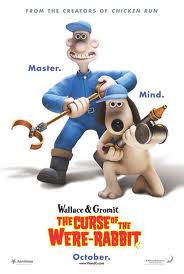
For this post, the third in the five post challenge series, I thought I would share something I did in class the other day. Following on from Wednesday’s post, about dubbing video, this simple activity is another way of exploiting video in class. However, this activity is designed for a lower level class. Choose a film which is familiar to the students, so that they can follow the action without too much difficulty, or with plenty of visual humour. I chose ‘The Curse of the Were-rabbit’, from Aardman productions, with the younger classes, and with the older students I used ‘Love Actually’. wallace and gromit

Before you show the film, give different groups of students a vocabulary topic – for the Wallace and Gromit film I chose ‘vegetables’ and ‘rabbits’, while in ‘Love Actually’ the words were ‘Christmas ‘ and ‘Love’ –  and brainstorm possible words that might form part of that topic. Ask the students if they know what film they are going to watch based on the vocabulary topics they have been given. Then tell the students that when they hear something from their vocabulary topic they are to stand up. Alternatively, have the students make large signs with their vocabulary topics written on them, so that they can hold them up when they hear their words.

It’s important that this activity doesn’t go on for too long without a break, as the students may find it difficult to concentrate for more than about ten or fifteen minutes, but they usually find the challenge very stimulating and participate well. The main point here is that the students are exposed to authentic language, while at the same time not having to worry about understanding everything, which they cannot do and so may become easily frustrated.

5 great ice-breakers in 5 days: #1 Where in the World… | Teach them English

Simple, quick and fun. Guess what I’ll be doing in class next week.

earth-and-the-moon

http://www.teachthemenglish.com/2013/04/5-great-ice-breakers-in-5-days-1-where-in-the-world/

Running Dictation Extension | The Comprehensible Classroom

This post suggests a novel way of extending a running dictation exercise in class:

English: classroom

English: classroom (Photo credit: Wikipedia)

http://martinabex.com/2013/04/18/running-dictation-extension/

Let’s Share: Teaching Writing to Young Learners | Oxford University Press

Here’s a link to another post about teaching writing, this time a webinar about teaching writing for young learners:

child writing

http://elt.oup.com/events/global/lets_share_teaching_writing_to_young_learners?cc=global&selLanguage=en

Virtual Exchange Projects: Lessons learned so far | ROSE BARD – Teaching Journal

http://rosebardeltdiary.wordpress.com/2013/04/17/virtual-exchange-projects-lessons-learned-so-far/

Introducing… Evridiki Dakos

wpid-Screenshot_2013-04-15-10-15-24.jpg

An introduction to another of the speakers at the ISTEK ELT Conference:

“In the lead up to the ISTEK Schools 3rd International ELT Conference, we’ll be introducing some of the presenters on the blog. Next up is Evridiki Dakos…

Could you tell us a bit about yourself?

Evridiki Dakos, the author of the Course Books Sparkle Grade 1, Sparkle Grade 2 and Sparkle Grade 3 is a graduate from Marmara University and has been teaching English for 22 years at Private Zografyon Greek High School while she has been teaching young and very young learners for the last decade. She has been awarded a CELTA certificate by University of Cambridge. She is a certified Pre-school Teacher by the Turkish Ministry of Education, Montessori Teacher Assistant, freelance Teacher Trainer, ELT speaker and Workshop Leader, ELT Blogger, University of Cambridge ESOL Exam Coach and Oral Examiner for YLE and KET/PET…”  (Read more).

Teaching Writing to Young ELT Learners

blog-header-v2 (OUP)


Here is a post from the OUP ELT Blog by Karen Frazer about a subject dear to my heart – teaching writing.

Smiling Student

http://oupeltglobalblog.com/2013/04/16/teaching-writing-to-young-elt-learners/

Armstrong and Miller, RAF Pilots

This activity is one of those I described in my post ‘How to … exploit video in class’.

The objective is to get the students to produce a possible alternative script for this video clip. Play the video with the sound turned off, and ask the students to describe the situation which they see. If necessary play the video twice. Ask them where the men are, what their job is, and why the film is in black and white. Fill in cultural details as you consider necessary.

In pairs, the students should discuss what the men might be talking about, and what they have just heard on the radio. After sharing this in class, the students work in their pairs to write a possible dialogue which fits in with the changes of speaker on the video as closely as possible. Be prepared to play the video several times while they work so that they can check how well their script synchronises with the film.

Once the students have prepared and rehearsed their scripts, they perform them in time with the film in turn. I usually give them two attempts at this. It can be a nice touch to record them as they speak, then play back the recording in time with the film, so they can see how their words fit more clearly.

When all of the pairs have performed their scripts, the class watches the original version of the video with sound.